
Ficha de producto
Cabos de alto rendimiento
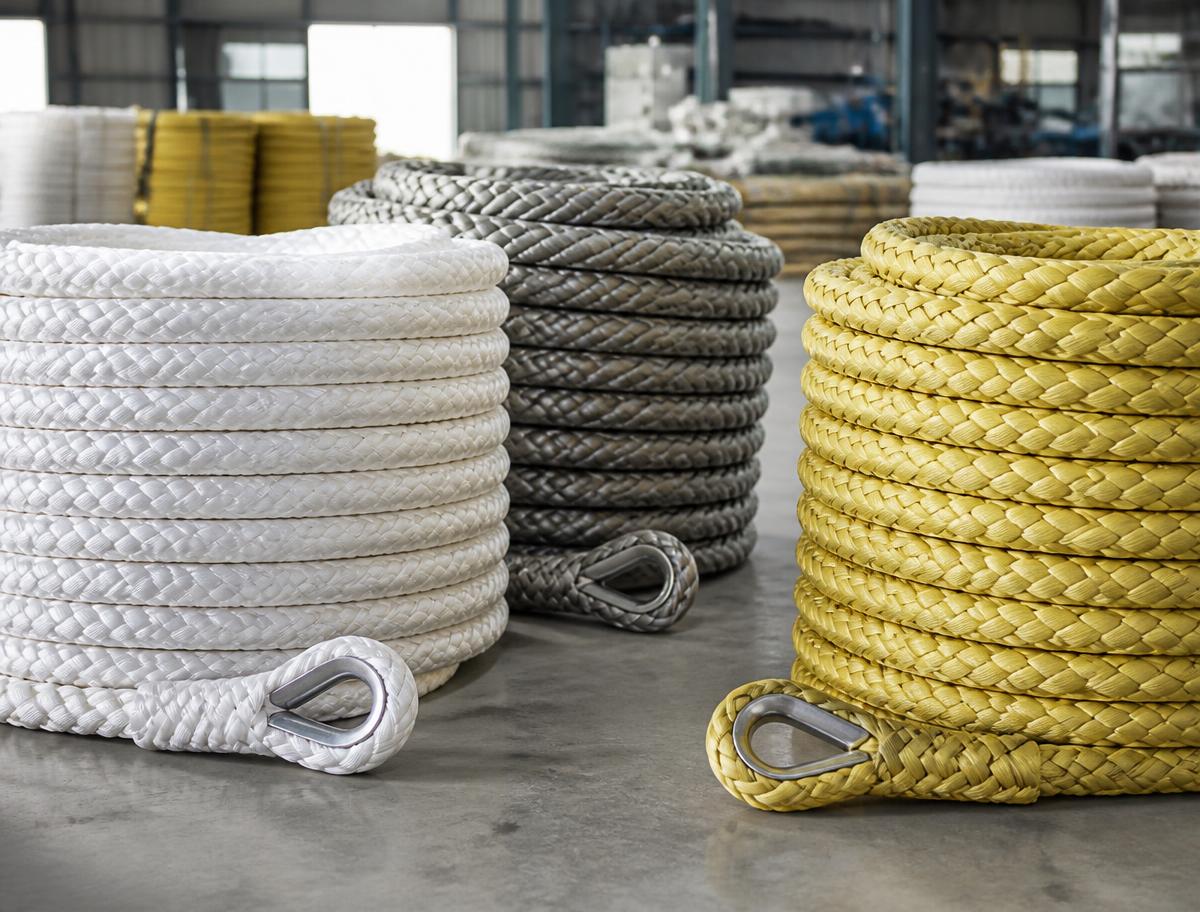
High performance ropes are built from high-modulus fibres — HMPE (Dyneema SK78 / SK99, Spectra), aramid (Twaron, Technora, Kevlar) and LCP (Vectran) — and reach the break load of steel wire at a fraction of the weight, with 1 - 4 % working elongation and no snapback energy stored in the line. They are used where crews must handle heavy mooring, towing or winch lines by hand, where a winch drum is weight-limited, and where a line has to hold station with almost no creep or stretch. Every rope is engineered as an assembly: fibre and coating chosen for the load case, spliced eyes, protective covers at the fairlead and a Line Design Break Force certificate.
- Fibres
- HMPE (SK78 / SK99), aramid (Twaron, Technora), LCP (Vectran)
- Construction
- 12-strand and 12x12 braid, coated; optional braided cover
- Diameter range
- 6 mm - 120 mm
- Break load
- Up to and beyond equivalent-diameter steel wire
- Elongation at break
- 1.5 % (aramid / LCP) to 3 - 4 % (HMPE)
- Weight
- Around 1/7 of steel wire of the same break load
- Coating options
- Abrasion, heat and grip coatings; polyester chafe covers
Aplicaciones
- Wire rope replacement on mooring and towing winches
- Escort and emergency towing lines, pennants and stretchers
- Offshore and heavy lift slings, crane and pull-in lines
- Yacht running rigging, halyards, sheets and dock lines
Normas
- ISO 10325 (HMPE fibre ropes)
- ISO 2307 (break load and elongation testing)
- OCIMF MEG4 LDBF and line management documentation
- DNV / Lloyd's / BV certification on request
- HMPE creeps under sustained high load and softens near 145 - 150 C — keep drum friction and surge under control.
- Aramid and LCP must be covered: bare fibre loses strength in sunlight.
- High performance lines are low-stretch, so shock loading is taken by the fittings — check bollard, chock and winch ratings before switching from nylon or wire.
Los valores son típicos para el tipo de fibra. Las cargas de rotura, pesos y tolerancias exactos figuran en el certificado que acompaña a cada cabo.