
Fiche produit
Amarres
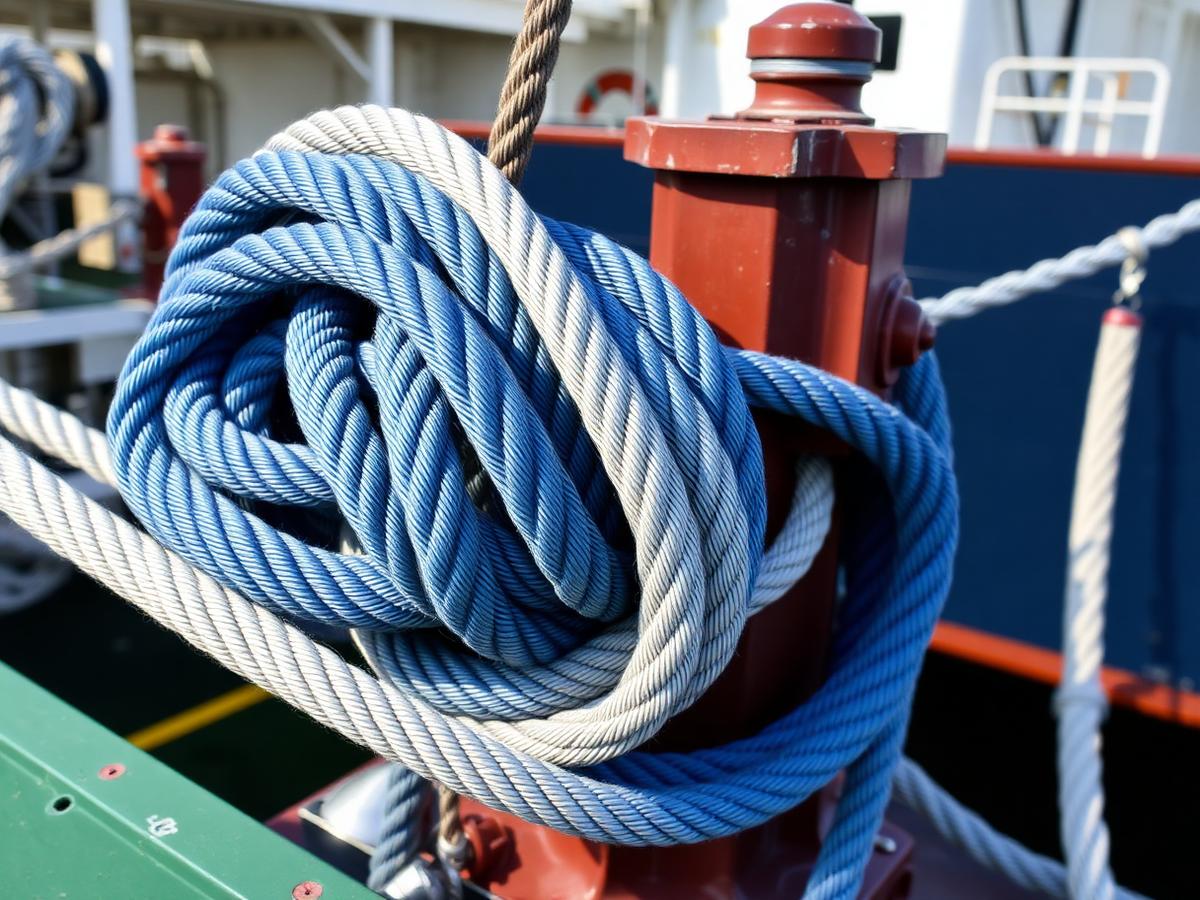
Mooring ropes are the lines that hold a vessel to the quay, a buoy or another ship: head lines, breast lines, spring lines and stern lines. The right rope is chosen by fibre rather than by name — polypropylene for light and buoyant harbour work, polyester where the ship must be held tight with minimum stretch, nylon where shock absorption matters, HMPE where wire-equivalent strength is needed at a fraction of the weight, and steel wire where winch storage and abrasion dominate. We supply the complete mooring arrangement: the line, the eye splice, the tail, the shackle and the certificate.
- Fibre options
- PP, PES, PA (nylon), HMPE, mixed / combination, steel wire
- Construction
- 3-strand, 8-strand plaited, 12-strand braided, double braid
- Diameter range
- 8 mm - 128 mm
- Elongation at break
- 3 - 5 % (HMPE) up to 20 - 25 % (nylon)
- Terminations
- Hand-spliced eyes, thimbles, tails, whipping and tagging
- Standard length
- 110 m, 200 m, 220 m or made to order
Applications
- Head, breast, spring and stern lines
- Merchant ships, tugs, workboats, fishing vessels and yachts
- Buoy and STS mooring arrangements
Normes
- ISO 2307 (rope break load testing)
- ISO 1346 / 1140 / 1141 / 10325 by fibre type
- OCIMF MEG4 line and tail management
- Every line is supplied with a break load certificate, batch number and line record card.
- Nylon and mixed lines store high energy — snapback zones must be observed.
- See the individual fibre pages for full technical data and selection advice.
Les valeurs sont typiques pour le type de fibre. Les charges de rupture, poids et tolérances exacts figurent sur le certificat livré avec chaque cordage.